Sunday, April 4, 2010

Semana Santa, Part 1

Here, the equivalent of spring break is Semana Santa (Holy Week), or the last week of Lent before Easter. On Palm Sunday (the day of Jesus' death), there are huge processions in every city, and the next week all the kids get out of school. The weekend of Palm Sunday my real family came to visit me. I had never been so homesick before, so it was so nice to finally see them after two months. We hung out with my host family, wandered around Salamanca, and watched Salamanca's Palm Sunday procession.
The first night was a little awkward; we invited my host family out to this trendy restaurant called la Hoja, and I failed to properly translate the menu. We ended up accidentally ordering a seven course meal rather than the normal three. The first three plates were pretty difficult to sit through, as the only people who were having a fluid conversation were Natalia, who is 11 and speaks pretty good English, and my little sister Kia, who's also 11. A glass of wine and another course later the adults were finally starting to warm up. It was like they were all planes and I was the control tower; everything they said had to go through me. So, I spent the night translating from Spanish to English and vice versa. Of course I didn't make the connection that my mom and my host mom both spoke French until the next day at lunch.
When they finally figured it out, we were sitting in slightly smokey (but bearable) authentic Spanish restaurant, eating one of the most typical foods of Salamanca: cocido. It's made with these tiny short noodles and garbanzo beans. First you eat some of the soup in your bowl to make room. Then you fill the space you just made with carrots, potato, chorizo, chicken, and beef. I giggled to myself when Fonsey insisted that my mom try a piece of lard on bread. My mom kept trying to refused, but Fonsey passed it to her anyway, and not wanting to offend, she took it. A little later a thought occurred to me, because I'd been getting tired of translating. "Mom, don't you speak French??" She replied yes. "Dude! Fonsey speaks French too!" and that started a whole new thing. Now I only had to worry about translating for Carlos and Mr. Saleh, both of whom had been cracking jokes the entire time (Carlos about his mafia-like business and Mr. Saleh about terrorists). I was slightly annoyed with Carlos; he knew enough English to tell me mom things like, "Oh Caroline - so sad - only drink and smoke, never study! never comes home!" but he needed me to translate his other jokes.
The next day my family and I barely had to eat, we were still so full from the previous two days, so we passed the time wandering through the church of San Esteban, the Cathedral, and watching the Palm Sunday procession. This was something to see. When I first saw the people in the their white robes, pointed hats and face masks, I was immediately reminded of the Ku Klux Klan. Then second thing I thought of was New Moon. Because this was really similar to what was happening in that little village in Italy when Edward went to go provoke the Volturi: a very religious, robe donned mob. While they were both religious festivals, the contrast between this procession (really a funeral march) and the parade of falleras bringing flower to the Virgin was astounding.
That night we went to my family's house, and I showed my family around. To get back at Carlos, I showed them the basement first. "This is where I sleep," I told them. "Sometimes they give me a blanket."
We went back upstairs for snacks (though no one was really hungry) and eventually said good-bye. I had school in the morning and my family had a flight home at 6 am. It was really hard to say good-bye, only having been able to see them for three days, but at the same time I realized that I only had three months left. Yes - I was sad to see them go, and wished they could have stayed, but I might as well enjoy the time I have left here, because it's not too long, and I will see my family again soon enough.

Saturday, March 27, 2010

Las Fallas


Imagine a carnival without the rides, streets strung with the lights of Ballywood, the smell of melted chocolate, and the sound of fire crackers exploding in the closed off streets. A woman in an 18th century hoop skirt and a little boy in knee socks follow the crowd toward the center of the square where stands, towering multiple stories, la Falla.

You try to keep up with Natalia and Patricia, pushing past the crowd. You drop your camera and stop to pick it up. When you look up, you’ve lost sight of the girls, and you’re lost in a mess of people. A grown man shoves past you. You try to move forward, but you’re stuck between bodies. Finally the mob starts to disperse and you make your way to the edge, catching sight of Carlos (you host father). Reunited, you continue with the family towards the falla. When you reach it, Carlos explains the gigantic, surreal sculpture.

“The people of Valencia, Valencianos, spend all year building the fallas, and each one has a theme, like the Spanish cinema or the economic crisis.” The theme of this one was Insanity. You see a gigantic gentleman in a top hat an and coat drinking a green potion on one side of the structure, and on the other you see his deranged transformation, broken bottle in hand.

A girl wearing the same type of dress as you saw earlier – laced bodice, hoop skirt, intricate floral patterns and bright colors – runs up to Patricia, and they shout and laugh in surprise. It’s Maria, one of Patricia’s oldest friends. They met one summer while your host family was vacationing (as they do every summer) in Valencia. She offers to take you inside the falla so that you can take pictures without the crowd of people. As you walk around the falla, you notice signs on nearly every part, but you don’t recognize the words. As it turns out, they’re in valenciano, a distinct dialect of Spanish. You crane your neck to see the top, and a flying pig comes in to view, reigning over the caricatured little world.

As you walk through, Maria explains to you that at the end of the week, all of the fallas will be burned at midnight. This is called la cremà. The next day, preparations for the next year will begin. Her falla is called Na Jordana, and everyone who lives in her neighborhood is part of the same falla. All of the women and girls, falleras, wear the same type of dresses. Each one is unique, made of fabrics from Valencia. Tomorrow they will all parade through the streets, bringing flowers to the Plaza de la Virgen.

You follow Maria to a building where everyone one from Na Jordana is eating dinner. Men in traditional Argentine clothes serve meat to everyone. Hungry, you take a bite of a dark sausage. Patricia gives you a surprised look and tells you what it is. Onions and blood. You decide not to eat anymore. When everyone is finished eating, you follow your host family back onto the street. You are about to head toward the center of the city to watch the nightly fireworks.

At 1 am the fireworks start. They are much louder and with more frequency than you have ever seen before. They were designed by the Caballer brothers of Valencia, some of the most sough after producers of specialty fireworks in the world, and will cost the city over 100,000 Euros. You watch as a silver explosion transforms into floating hearts that descend as slowly as feathers, as if becoming gradually lighter. Twenty minutes and thousands of slivery firecrackers later, you head to the car and back to the family’s flat outside of the city. Tomorrow you won’t wake up until noon.

The next day you and the family head into the city at 1:30. At 2 o'clock you find yourself in yet another crowd, awaiting the Mascletà. You're not sure what you're waiting for, and are about to ask when you hear what sounds like a reenactment of Sarajevo in 1914. A cloud of puffy white smoke rises in front of the crowd, slowly engulfing the buildings. Behind it you can see a few red sparks flying in all directions. The crashes grow louder and become more frequent and the tension mounts. Finally a man shouts, and like dominoes, the entire group applauds, whooping and clapping. The Mascletà ends, and the day begins.

Now, Carlos wants you to see the parade of the Falleras, so you wait on a street corner. First you hear the band, and then, in the distance, you see tiny figures, like dolls, walking forward. As they come closer, you realize they're little girls, all with their hair done in the traditional valencian style, wearing beautiful, colorful, lace adorned dresses. Their mothers follow behind them, and then their fathers and brothers. The will use the flower they carry to cover the statue of the Virgen in the plaza.

After watching the last of the Falleras go by, you and your host family meet up with Miguel and Anna, some friends from Salamanca, also here to enjoy the festival. Miguel bought some petardos, or fire crackers, and you and the girls spend the rest of the night exploring the fallas and throwing petardos. It makes Fonsey nervous, so she walks a distance behind us.

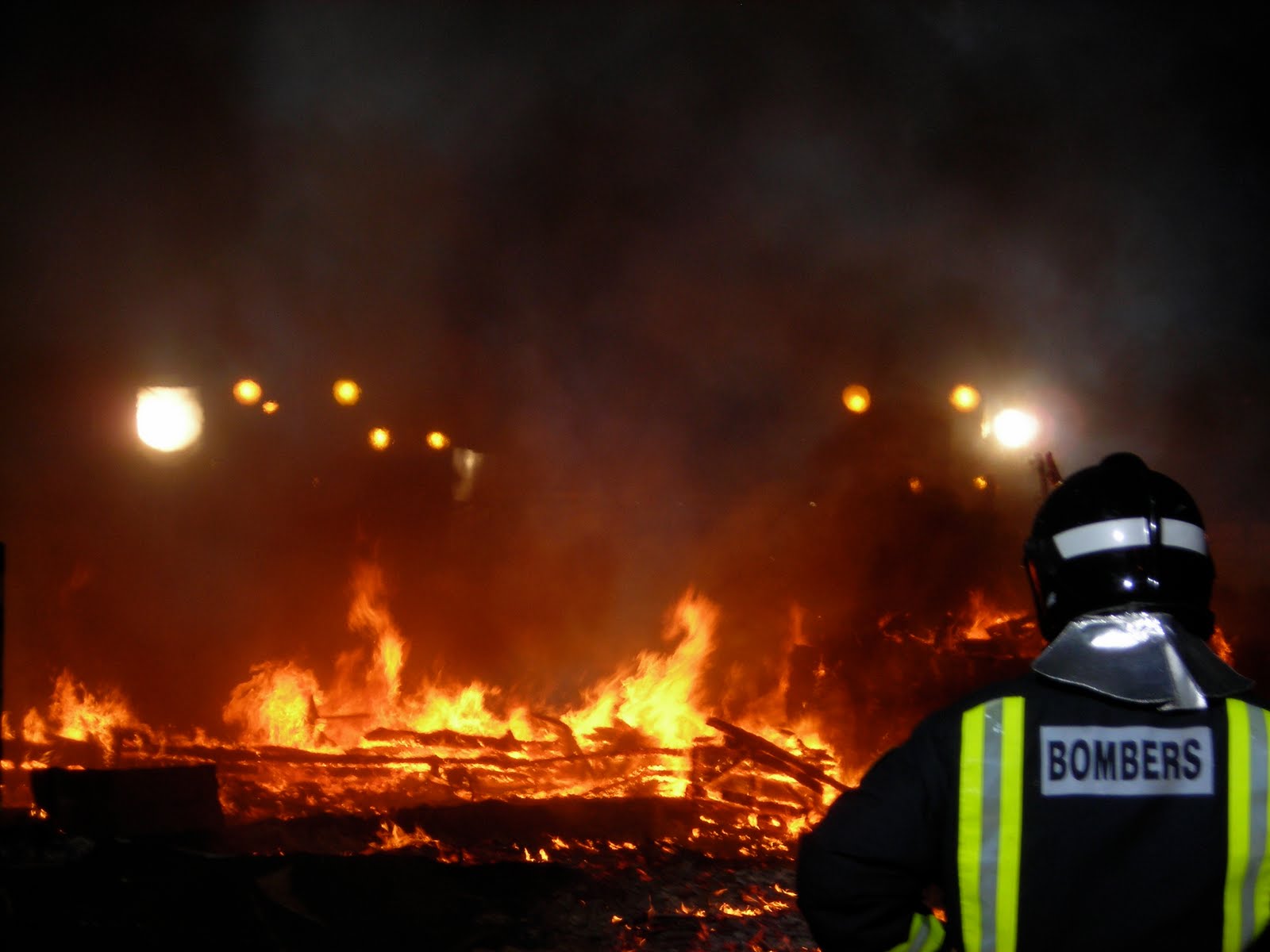
At the end of the night, you are invited to watch la cremà from Maria's balcony. At midnight, you see the falleras crowd around their beloved falla, accompanied by bomberos, firemen. They light the little wonder on fire, and the fallera mayor begins to weep. You watch as the flying pig falls, burning, to the ground, and are reminded that only in a fairy tale could he keep his wings. The fire goes out more quickly than you expected, and you are exhausted. Tomorrow, the city will be cleared of all 150 fallas, and it will be as if it never happened.

Thursday, March 25, 2010

Chuck Bass

In the beginning, I did a lot of nodding and smiling, pretending to understand, laughing when other people laughed, being awkward. Now, with nearly two months under my belt, the disconnect is losing substance, and I’m starting to think in Spanish. More importantly, other people are starting to see that I understand, and I’m becoming more than just the exchange student who doesn’t get anything.

Every Friday we have a supplemental class called tutoria. It’s sort of like a homeroom, or advisory, except with 30 + people. This trimester, the students have been giving short speeches about Africa during this block. Some of them I found comical - “the animals of Africa include leopards, lions, and piranhas…” – others struck me as so general, they toed around offensive – “in Africa, the main food source is hunting.” And then there were some that I found interesting, with topics like the comparison between the treatment of women in regions with strong education systems and areas where few go to school. I began to think about what I would say in my speech.

My teacher during tutoria is Don Francisco. He’s tall, with birdlike features and thin, floppy hair that I imagine probably went through a great cowlick stage when he was a toddler. After the speeches had finished one Friday, I asked him when I would go. He looked at me, and shouted, “you mean you want to do this!?” as if I were crazy. “You? Want to do this?” A little taken aback, I replied that yes, I wanted to try because I wanted to improve my Spanish. And that’s how I ended up walking to the podium a week later, paper clenched in hand.

I had practiced reading it over and over the night before, concentrating on making all my Zs and Cs sound like “th” and rolling all my Rs. I opened my mouth and just let her loose, thankfully not having to think about looking up every few words as that came pretty naturally, thanks to practice from Model UN. My speech was about the negative effects of imperialism on various countries in Africa, focusing on the Congo Free State as an example (PS Dr. Naeher, I barely had to look anything up!).

By the time I finished, hinting at a correlation between the unrest of the Republic of Congo today and the unrest of its history, I felt my ears burning and I knew I was red as a tomato. I was surprised, though further embarrassed when everyone told me how well I had pronounced everything, and that they were shocked that I could actually speak Spanish.

In the end, I won a little laser pointer, which I have actually been enjoying tremendously. After each speech, every one voted, and mine was voted one of the top ten. Other people won things like incognito glasses (with the nose and the mustache) and little stuffed tigers.

Ever since, class has started to get a little more interesting. In classes with Don Franscisco, economics and philosophy, he’s started calling on me to answer questions. The other day we had an argument about Skinner’s stimuli/response theory of psychology. I don’t know what it’s called in English, but Skinner’s basic argument is that psychology should only consider stimuli and the responses they solicit, and that consciousness and personality are void because you can’t prove they exist.

Afterwards, the girl who sits a few seats behind me, Cristina, mentioned that she was surprised about how much I understood. I was ecstatic to hear that, not because I needed a second opinion (I knew I understood), but because it meant that other people could see that I understood. I had been getting so sick of asking questions in Spanish and listening to my classmates struggle to reply in English because they thought I just didn’t get it. But now, the dynamic is changing, and maybe the playing field is starting to level off.

The next day I saw Cristina walking home from school on my way to the library. I caught up to her and we walked together. She told me that she was going to be going on an exchange program to the US, living with a family in VT for three weeks. Wait. VERMONT?! DUDE!!! I SORT OF LIVE THERE! So I told her she had to let me know when she would be there so I could show her around. Just as she was about to turn the corner to her house, she asked me where I was eating. I told her I would pick something up at the market, or something. She looked horrified. “Ven comigo para comer!” I told her no, it’s ok, I didn’t mind eating alone, but she insisted. So, excited to have made a new friend, I accompanied her to the second floor of a gray building across the street from a small bakery.

I opened the door to the smell of tomato sauce, and to the feeling of a bird pecking at my feet. I looked down and was shocked to see a chicken – or something – on top of my shoe. “Chuck! Que haces?!” Cristina laughed. She scooped him up and explained to me as we headed to the kitchen that Chuck (named after Chuck Bass from Gossip Girl) was a partridge that a friend of her father’s had given her. She liked having a partridge better than a dog or a cat because he was a lot cleaner and didn’t smell. Ok, I thought. I’ll have to make friends with him.

In the kitchen we found her father slicing pieces of jamon, just the way Carlos had taught me. He said hello, and that he hoped I liked spaghetti.

After helping set the table, we all sat down to eat and watched some Spanish news. After we finished eating, he asked me what I wanted to eat tomorrow… surprised but pleased that I was invited again, I said that whatever they were having I’m sure I would enjoy. But he, like his daughter, insisted, so I caved and admitted that I had been dying for some vegetables. The next day when Cristina and I arrived at her house for lunch, there was a pile of roasted red peppers and a plate full of tomatoes waiting for us on the table, watched over by Chuck.

So, I’ve been making more friends, getting comfortable in school, and enjoying soccer. But there are some vital aspects of my life that are missing, namely, Phoebe Long. Ever since sixth grade when we were next-door neighbors, we had a bond. We always enjoyed spending time together, obsessing over High School Musical or Miley Cyrus. But what reminded me of her today was Cristina. Because, like Cristina, she always welcomed me into her home and treated me like part of her family, so while Cristina is no Phoebe substitute, it’s wonderful to have found someone as accepting as her while I’m so far from home.

Saturday, March 13, 2010

Zamora

Lili had been so excited all week, and wouldn't stop talking about it. "She named him Javier! Javi! I just want to eat him up," she told my one day in class. "Do you want to come see him with me this weekend? My cousin lives in Zamora - you could see another town!" So I told her sure, I'd go with her to meet her cousin and her new baby.
We ate at her house after school - pasta, pork chops, bread, and natillas. Natillas is this delicious desert, sort of like vanilla pudding or custard - but better. Then we changed out of our uniforms and got ready to head out. I loaded up my bag with the necessities: wallet, camera, cell phone, bike bottle. Upon putting my water bottle in my bag, Lili asked me why I was bringing it. "Because I'll get thirsty," I replied.
"But you can just buy a water bottle," she answered. I tried to explain to her the importance of proper hydration, but she told me drinking water was bad for you. I suppressed a laugh.
By bus, Zamora is about 45 minutes from Salamanca. About half way through the ride I began to regret bringing my bike bottle, because in Spain the busses don't have bathrooms. Suffice it to say it was a very long 45 minutes.
When we arrived in Zamora, a town of roughly 75,000 inhabitants, one of Lili's cousins picked us up. I introduced myself and we soon got into a discussion about running and marathons, and I was really pleased to meet someone else in Spain who liked to run.
From what I could see from the drive, Zamora was much smaller than Salamanca. It was certainly similar though. When we passed by the cathedral, I was reminded that every Spanish town has a cathedral which is always the highest building. To facilitate this, cathedrals are generally situated on hills. We drove towards the outskirts of town and came into an organization not too dissimilar from my own - though not quite so much like Little Winging (we even have a deserted playground reminiscent of dementors).
The house we pulled up to looked like a ginger bread house - tall and narrow, with mediterranean style roofing and white windows. We walked inside and Lili's cousin called us in to the living room. I walked in to find her breast feeding her baby, and I found myself unsure of what to do. So I just smiled and introduced myself, and apparently it didn't bother her at all that I was a complete stranger, and that she was breast feeding her baby right in front of me. Then Lili ran in and sat down right next to the new mom and her tiny baby, ready smother him as soon as he was finished nursing. We all talked for a while, snacking on strawberries, and in the middle of our conversation, the cousin who drove us here remarked that I spoke very well. I thanked him, and laughed, thinking to myself, if I spoke that well I wouldn't be failing Spanish Language and Literature right now. As the conversation went on however, I noticed that I actually knew what we were talking about, and wasn't just pretending to understand, as I sometimes do.
Lili had been holding the baby, Javier, and gave him back to his mom. I watched with some interest, mostly bewildered by how small he was. His mother asked me if I wanted to hold him. "Yo? No, no, gracias," I replied, but she began handing him to me anyway. She insisted, so I awkwardly took the tiny person into my hands. I didn't know how to hold him, so I just made sure his head was up. He started to whine and I knew it was my fault, so I promptly gave him back. I was impressed by the softness with which his mother picked him up, and couldn't help but note
Lili had wanted to show me around Zamora, so we thanked them and left. We walked through the cobbled streets and passed by churches and monuments, all the while singing American songs we both knew.

After a few hours of exploring, we were both starving. But I would much rather go hungry than do what Lili asked me to do.
"I can't do that!" I retorted. "I'm American!!"
"But I'm hungry," Lili protested, pushing me toward a group of boys walking our way.
"Why don't you ask them?" I complained.
"Because I'm Spanish!" Sure, use that home court advantage, I thought bitterly.
Suddenly I was alone in front of three strange boys, all taller and older than me, expectantly waiting for the lost foreigner to say something.
"Hola," I glanced back at Lili, gave her the coldest look I could muster, and reluctantly proceeded. "Sabes donde hay un McDonalds?" Sometimes people ask me if I'm from England, or France, but I cringed with the knowledge that as soon as I uttered the word "McDonalds" these boys knew I was American. They looked at each other, shrugged their shoulders, and one of them replied in English, despite the fact that I had asked in Spanish, "that way" and pointed down the street.
Lili and I walked for a while, but after fifteen minutes she let up her search for McDonalds and we settled for a Telepizza instead. I ordered the same thing one would have at a McDonalds: a cheese burger. But while I had loathed the idea of going to a McDonalds, I had fewer objections to eating the same ketchup slathered, luke-warm pickle topped, greasy cheeseburger at Telepizza. Because here, I wouldn't be associated with any stereotype. Sure, maybe I was filling one: all Americans eat fast food. But had I gone to McDonald's, it would have been like bleaching my hair platinum blonde and then purposefully failing a test. This was a little better, because here - while I was still failing the test (let's call it proper nutrition, Ch. 1) - at least I wasn't contributing the rather shameful association between McDonald's and Americans.


Friday, February 26, 2010

Padel

I felt my heart warm a bit when Patricia turned on the television and I saw my dear friend Miley Cyrus making an announcement in spanish on Disney Channel. However, Spanish Disney Channel isn't just American actors dubbed in Spanish. They have their own shows too, like my personal favorite, Patito Feo (Ugly Duckling). Imagine a performing arts school in Argentina called Pretty Land, full best friends, worst enemies, seduction, tears, laughter, and random dance-offs, and you've got Patito Feo. Most days, after the girls and I get home from school, we do our homework and have a snack, but as soon as Patito Feo comes on we drop everything. I am becoming quite the fan. I've already learned one of the dances from the show (to my slight chagrin). On the weekends, however, there is no Patito Feo, so my family passes the time at the Padel Club.
From what little I know about tennis and squash, padel seems to be a cross between the two. It's played with racquets made of styrofoam (or something) two or three inches thick, and a tennis ball in what looks like a tennis court. Four people on two teams occupy the court at a time, hitting the ball to the other side. If it hits the opposite wall before hitting the ground, it's a point against the serving team. If it hits the ground and bounces off the wall, a player must hit it back to the serving team, otherwise it's a point for them. Under no circumstances may you touch the net, and you can let the ball bounce once before returning it. In any case, they only play padel in Spain and Argentina, but it's very popular here.
Last weekend the local league championships took place at my family's padel club, so I accompanied them to watch. After an hour or so, I realized that this was much more a social event than anything, and that this sport was representative of the very essence of the Spanish bourgeoisie. Everyone playing was a business man, his kid, or possibly (though not probably) his wife. They all had multiple racquets, and their kids wore jackets with the names of the best padel players, etc. After the matches, everyone headed to the cafe to schmooze for hours on end. This was when I wished there were more matches to watch. In the cafe, my host sisters went off with their friends from school, and not wanting to be a tag along, I sat myself down with the adults, who, of course, began to smoke. The women, either in their sports garb or their sunday best, gossiped with each other or talked about their children, and the men joked with each other and argued about who should have won the previous match.
Carlos, my host father, noticed I looked a little bored. He took me over to the bar and told me to order a bocadillo and something to drink. So I asked for lomo, a popular thin slice of grilled meat eaten on a plain piece of bread, and a water. Upon mentioning "agua", Carlos started laughing, nudged my shoulder, and asked, "No, really, what do you want to drink?" To be quite honest, I truly wanted a glass of water. So that's what I said, but he insisted that I get something "better". He didn't give in until after I tried a sip of his cerveza y limon, beer with lemon soda. I had to make a conscious effort not to spit it out onto the floor. Not wanting to lie, I nodded my head and commented, "dulce,". Sweet.
We headed back over to the table. When I sat down I saw a new face had joined the group; he was a tall, stalky man, with a stubbly face and dark hair that swept across his face just above his eyes. He noticed me when I sat down, and said in a Portuguese accent, "Hello!" Carlos had told him I was an exchange student, and that I was playing soccer. We talked a bit, and as it happened, this guy used to play defense for Portugal. He quit, though, years ago when he met his wife and moved here, to Salamanca. He asked me if I was making friends. "Yes," I told him hesitantly, "but it's a little difficult". He nodded his head, and said slowly in rather broken English, "The people here are very closed. When I came here, no one was interested in me. Not until I started to playing padel," he added. "It's much more than a game." And with that, he got up and joined another party.
So what do padel and Patito Feo have to do with culture? I'm beginning to think of them like golf and Gossip Girl. People go to the padel club to catch up with their friends, to show off their new car, or to play a match with their boss. People watch Patito Feo because that kind of social turmoil doesn't exist in real life. Sounds pretty much like America. But there are some distinctions. For example, Patito Feo is about the equivalent of Gossip Girl, with sexual innuendos abound, but it's shown on Disney Channel, which leads me to the assumption that parents of younger children are less concerned about that than they are in the US. This assumption is also strengthened by some of the jokes my host parents tell at the dinner table.
In general it seems like here, everyone is a lot less judgmental about people enjoying themselves. You just told a really inappropriate joke in front of your eleven-year old... But it was really funny. You just smoked four cigarettes in half an hour... But you enjoyed it. You just ate a plate full of cholesterol... but it tasted good. I see these things, and I make judgments, but other people are a lot more laid back, and don't even notice. They don't have a lot of the social stigma that we do in the United States, and in a way, it's refreshing.

(ps, hi liz!)

Tuesday, February 23, 2010

Enferma

"Puedes probar si tengo fiebre?" I asked Vega, a girl who sits next to me in our History class. She put her hand on my forehead and told me yes, she thought I felt warm, and that I should go to the secretary. Celeste, one of her friends, said she'd go with me.
We walked in and I timidly told one of the secretaries that I felt bad. She put her hand to my head and said she didn't think I had a fever. Then a thin blonde woman came over. She did the same thing and retorted that I definitely had a fever. Then my math teacher happened to walk in. She also took the liberty of feeling my head. According to her, I didn't have a fever. Finally the first secretary produced a thermometer, ending the argument - for the time being.
In another room, I sat down and Celeste turned the thermometer on. She handed it to me and I stuck it under my tongue. Suddenly she looked bothered, and grabbed the thermometer from my mouth. "No, no, no," she said. "Ponla en tu axila!" Put it in your armpit. Oh. Gross. I sheepishly took back the thermometer and stuck in under my armpit, thinking of all the other armpits this thermometer had been in... When it beeped I checked the number. 45.6 degrees, roughly 115 degrees Farenheit. I was dead. We tried again, but didn't get a viable number. So, we went back to the secretary's office where the blonde woman announced that I needed to go home anyway, and that she was calling my family. Half an hour later Fonsey, my host mother, showed up. She asked me what was wrong and I told her I had a fever, and a minute later the first secretary popped her head through the window to tell her I didn't. In any case, Fonsey was taking me to the doctor.
Half an hour later I walked into an airy room with opera coming from the stereo in the corner. The doctor, a tall man with a gentle manner, began poking and prodding me in the usual way. After a few minutes he told me that my stomach hurt because I was stressed and that my throat was red and inflamed, though I hadn't complained about anything other than feeling feverish (for some reason he didn't check my temperature). He gave me a prescription for three different medicines. Fonsey and I thanked him and left, and as we walked down the street to pick up my medicine, I burst into tears. I certainly wasn't sad, but I was frustrated. All I knew was that I was burning and freezing and I wanted to go to sleep.
We arrived at Fonsey's parents house a little later. Fonsey had offered to take me all the way home, but she had work to do in the city, and in a few hours she'd have to pick up the girls from school, so I said I could sleep there for a few hours. I headed straight to the guest room, but just as I was pulling back the covers, Fonsey took me by the arm into the kitchen. She insisted that I had to eat something, sat me down, and put a bowl of macaroni and plate of chicken in front of me. "No, no puedo," I told her. My stomach hurt, I was queasy, and chicken and macaroni were the last things I could hold down. I tried to get up, but she stood behind my chair. Finally we agreed on a piece of bread and a banana, though I threw most of the bread away while she wasn't looking. After I finished I made my way back towards the guest room, desperate to get warm and to get some sleep.
I had one leg under the covers when Fonsey exclaimed, "No, no, no! Necesitas pijamas!" Pajamas? Not wanting to argue more, I waited by the bed - the beautiful, warm bed - as she rummaged through her parents' room for something for me to sleep in. Finally, she came back with what looked like her father's night shirt. Ok, I thought. Why not. Exhausted, I put on the shirt and then my fleece. Again, I tried to get into bed, but not before Fonsey stopped me. "You can't wear your fleece," she told me in Spanish. "You'll get too hot." I didn't bother protesting. She took my hand and told me that if I needed anything, I should call her. She left, I put my fleece back on, and I crawled under a heap of covers.
If I have learned anything from getting sick in Spain, it is that people hover. If there is something wrong, its everyone's business, and everyone has an opinion. I also learned that, if my host mother is any indication of the majority of Spanish mothers, the Spanish mother is very loving, but adamant. It was reassuring to know that Fonsey was so concerned, but I still felt homesick, wishing my mom was there to give me a bottle of gingerale, tell me I didn't have to eat right now, and let me sleep in whatever clothes I wanted.

Thursday, February 11, 2010

El Futbol

On Sunday, I woke up at 6, much to the shock of my host family, to get on a bus with the entire Navega Femenino B equipo del futbol. All of the girls are high school age, and love to play. We waited outside the entrance to our home field, Navega, for the bus to arrive. We were going to Burgos, a city known to tourists for it's fantastic cathedral, and to Spaniards for it's frigid temperatures. Unbeknownst to most foreigners, many of Spain's provinces experience winters comparable to those of the US Mid Atlantic region - cold, but not quite as dramatic as it gets in New England. All of the girls wore their red parkas, paid for by one of the team's multiple sponsors. Each girl also had in tow a red sports bag, sweatshirt, and jersey. Theirs is one of the best teams around, and only last week they beat the second best team in the league.
Unfortunately, I am not allowed to play yet because FIFA recently changed their rules, mandating that minors who aren't citizens of the EU are not allowed to compete in league games. However, watching from the stands was still a blast. Everyone's parents and friends were there, and one guy brought a megaphone through which he sang patriotically every time we scored a goal, or did anything laudable. On the field and in the stands, everyone participated zealously.
Aside from the energy and the fanfare, I noticed during that game how differently they play here. While at home, we always hear coaches saying "keep in on the ground" and "possession, possession, possession," here they have a different take. Of course, solid passes and strategy are key, but everything is bigger. Rather than weaving a ball up the field with ten quick, consecutive passes, they might just send it and have their striker take a whack at it. And when I say whack I mean something of a missile. They also have fantastic footwork in general, which makes their less conservative style effective. The most remarkable thing about how they play, however, is how much fun they have - all the time. In practice, in the locker rooms, and on the field, everyone is always joking, laughing, and loving what they're doing.

And the game in Burgos was pretty much the same. Only this time they lost. For a couple minutes following the game, everyone was pretty quiet. But after we ate a quick lunch and got back on the bus, it was as if nothing had happened. We spent the rest of the ride taking photos and listening to music, until the girls started telling jokes. When they ran out, they demanded that I tell one. This, as you can imagine, was quite the challenge. I tried translating, "How do you make a tissue dance? - Put a little boogie in it!", but realized that it only works in English. After that massive fail, they insisted that I try another, sure that I must know something funny. I thought for a while, and finally came up with a translation for a few dumb blonde jokes - and these went over much better. The parents at the front of the bus heard us laughing and told us to tell them too - and that's how we spent the rest of the ride, telling jokes and playing games with everyone (PS to you O'landers... we played Kyle's number game - I had everyone stumped forever).
The next day Elena, one of the girls from the team, struck up a conversation with me on Tuenti (Spanish facebook!) and invited me to meet up with her and some other girls from the team in the Plaza Mayor. Pumped to get to know the team a bit better, I showed up at 5 under the big clock at the front of the plaza. We walked around for a while, they taught me bad words or palabrotas, and did some shopping. We went to Zara (pronounced Thara) one of the most popular stores in Spain. We went to Estradivarius, a shop with loads of clothes for clubbing - sequined pants and what have you.
After going to a few more stores, Elena asked if I wanted to see the university. I agreed, excited to see the second oldest university in Europe. On the way we passed by the cathedral. It's carvings and gargoyles reminded me of Emma.


A carving of an astronaut reflected the light hearted spirit of the people here. Next we passed la Casa de las Conchas, one of the city's oldest buildings. On the outside, its covered in stone shells, hence it's name - the House of Shells. Legend has it that there's money inside of each shell.


Finally we arrived at the university. The facade was also covered in carvings, and Soraya told me to find the frog. A little confused, I looked and looked, and finally on top of a skull I spotted a little stone frog. "Now you have good luck!" she told me. In the meantime, night had fallen and the wind had picked up. That was our cue to go home. So I met Carlos at the end of the pedestrian zone and at 8:30 turned in for the night.